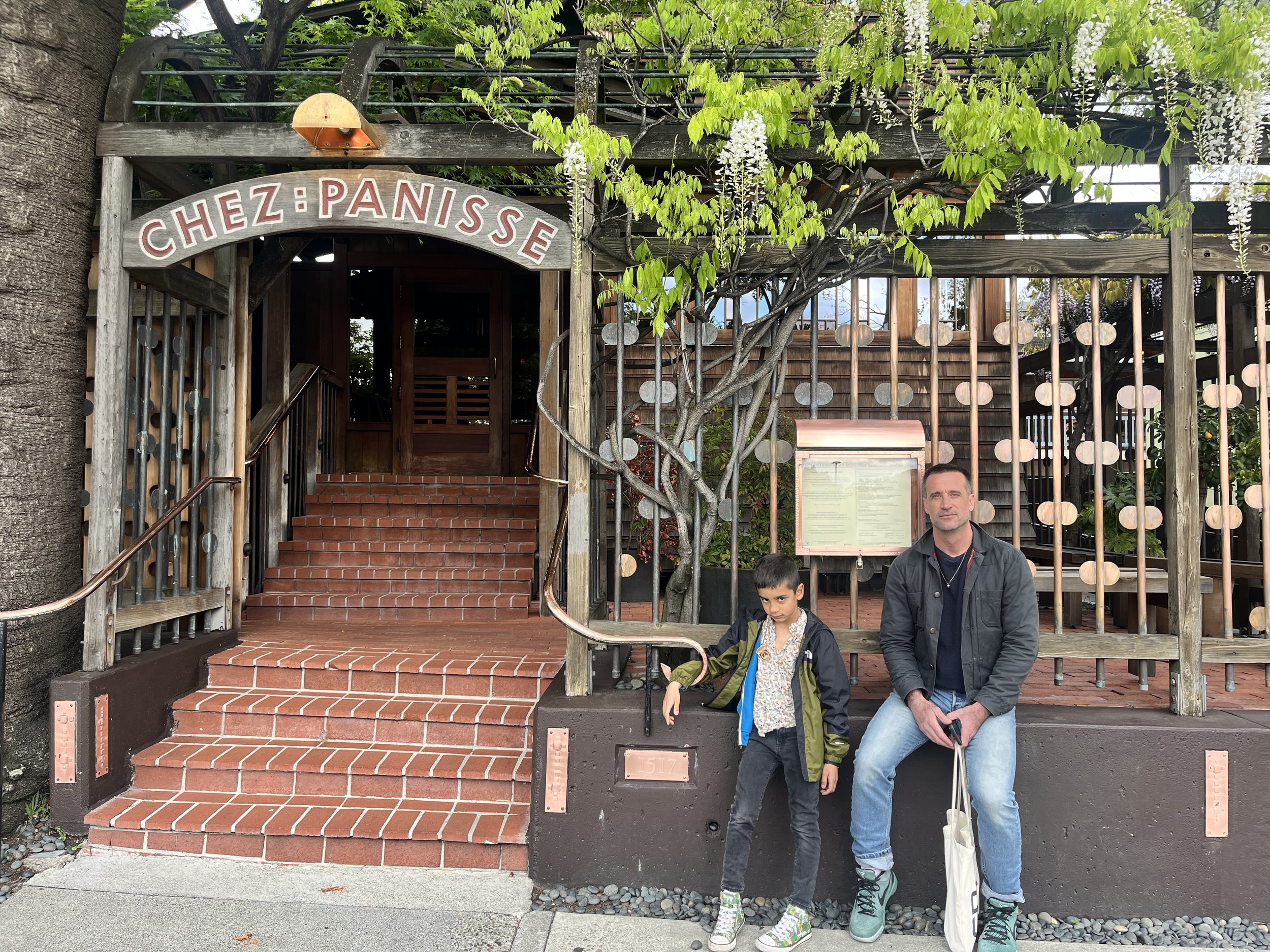
Hi, I’m Augustine – but not like the city in Florida. It’s AHgustin. AWgustin. Augustine.
I’m an author and historian. I write about US and global history to try to understand things in the present that feel surprising, intriguing, odd, complicated, and maybe just a little … suspect — especially masculinity, sex, family, work, and capitalism.
My book Fatherhood(Scribner, 2025) is a history of masculinity, family, and patriarchy that spans thousands of years but started from my own questions about what it means to be a father. My son was born in the summer of 2017. When we were in the maternity ward, every tv in the hospital was tuned to the trial of Bill Cosby: “America’s Dad.” That fall was the start of MeToo. Not long before, my father had a stroke that changed him and our family. In those moments, I wanted more than anything to find a new idea of what it meant to be a father — yet as soon as I started researching the subject I learned that, though fatherhood one of the most widespread and enduring concepts of power across human societies, we know very little about where it came from in the first place, how it has changed over time, and what it really means. My book explores those questions through stories of history’s most famous fathers, from Aristotle to Bob Dylan and beyond, and through stories from my own life. Fatherhood was named a best book of 2025 by The Economist and others.
My first book, Coffeeland (Penguin, 2020), is a history of five hundred years of globalization that started from the question of why we drink coffee. While doing research, I lived in El Salvador, once the most intensive coffee monoculture in the world. There I unearthed private records of one of the leading coffee-producing oligarchical families that contained extraordinary stories of life and work on coffee plantations, and allowed to trace connections and divisions between people who worked on plantations to produce coffee and people who bought and drank it in supermarkets, kitchens, factories, and offices around the world. Coffeeland was a New York Times Editors’ Choice selection and won Italy’s Cherasco International Prize.
Another project especially close to my heart: In 2023, I discovered previously unknown connections linking the celebrated writer and abolitionist Henry David Thoreau to enslaved labor around the Gulf of Mexico, stemming from Thoreau family pencil factory. Henry made key contributions to the family pencil business, which funded his Harvard education and his self-published books. He certainly knew, as all pencilmakers did at the time, that the type of cedar wood required for pencils came exclusively from swampy forests on the Gulf Coast, where it was harvested and processed by enslaved workers. These discoveries have the potential to change our treasured, canonical stories about Thoreau’s life and work — including the perpetual question of why he moved to Walden Pond in 1845. The story I wrote about my research, “Thoreau’s Pencils,” was published in The American Scholar in Autumn 2024 and recognized by Best American Essays.
A few things about me: I’m originally from Maine, but as of 2026 I’ve lived in New York City for most of my life. Growing up I wanted to write for magazines, especially Sports Illustrated. My first adult job was writing and editing music news at Rolling Stone, which at the time was right across the Avenue of the Americas from Sports Illustrated. In 2005, I went back to school for history and American studies because I wanted to learn how to write books, which, I learned, is not exactly what you learn in graduate school.
Now I live in Brooklyn with my son and write about things like: Why do men want to be called “Daddy” by people who are not their children? Why don’t men talk about their feelings? What will parenthood be like on Mars? When and how did we discover testosterone? That type of thing.
Talk soon!
Augustine@augustinesedgewick.work
High-resolution author photo (credit: Shervin Lainez, 2024)
High-resolution author photo (credit: Shervin Lainez, 2020)